- Findings also highlight differences between student and parent perceptions, as well as the growing role of digital tools in mental health support
- More than 6 in 10 Americans enrolled in college and young adults ages 18-28 not enrolled in college reported experiencing mental or behavioral health struggles in the past year
- More than 1 in 4 respondents who used AI-based platforms for health-related reasons reported turning to those tools for companionship, reassurance and/or emotional support
–(BUSINESS WIRE)–UnitedHealthcare today announced new findings from its fourth annual Young Adult & College Student Behavioral Health Report, a national survey conducted by YouGov examining how mental and behavioral health concerns1 affect Americans enrolled in college and young adults ages 18-28 not enrolled in college. The survey also explored how parents may perceive and respond to these challenges.

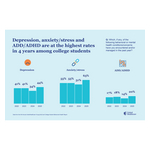

Survey data found that among both college students and young adults, more than 6 in 10 (62%) self-reported that they or a friend/roommate experienced a mental or behavioral health concern in the past year, reflecting sustained levels reported across the past four years.
Regardless of educational or career path, mental health challenges persist while parent perception diverges:
- Among respondents, 54% of young adults and 69% of college students said they experienced a mental or behavioral health concern in the past year.
- College students reported a 15-point higher overall incidence of mental and behavioral health concerns compared to their peers not enrolled in college, with anxiety/stress, depression and ADD/ADHD self-reported at the highest rates among college students in four years.
- The data also point to a perception gap between college students and parents. 69% of students self-reported a mental or behavioral health concern in the past year compared with 43% of parents who reported what they believe students experienced — suggesting differences in awareness between students and families.
“As the behavioral health needs of college students become increasingly complex, we believe that data-driven insights are essential for identifying the challenges students face and informing effective, evidence-based support,” said Raphael D. Florestal-Kevelier, PhD, MPH, CEO of the American College Health Association (ACHA). “When institutions provide resources and support, students are better positioned to thrive both on and off campus.”
The survey also explored digital tool use for mental health support, which may be increasingly shaping how young adults and students manage mental health. Responses reveal that for some young adults, AI-based platforms are being used not only for information-seeking but also for companionship or emotional support, reflecting evolving patterns in how support may be sought:
- 31% reported they or a friend/roommate used AI-based platforms for symptom exploration, information gathering or coping strategies in the past year.
- Notably, 26% of users turned to AI platforms for companionship, reassurance and/or emotional support.
“As young people are increasingly turning to AI for guidance, it’s critical that families, educators, employers and health care stakeholders work together to help improve health literacy, strengthen care navigation and expand timely access to care,” said Dr. Nicole Brady, Chief Medical Officer, UnitedHealthcare Student Resources. “By creating supportive environments and helping with the use of emerging technologies, we can help young adults feel more informed and empowered to seek help.”
Of all young adults and college students who reported not seeking help for their behavioral or mental health concerns, 25% cited cost as a barrier, underscoring how affordability can influence whether individuals seek care.
Addressing barriers to care
To help address these challenges and improve access to care, UnitedHealthcare offers a range of behavioral health resources, including telephonic 24/7 mental health support lines; digital tools such as coaching and Calm Health; employee and student assistance programs; a peer support program; and in-person and virtual care options — providing multiple entry points to help support based on individual needs and circumstances. UnitedHealthcare also offers parent and youth conversation starter cards designed to help support discussions about mental well-being, particularly in light of the perception gaps identified between students and parents.
For more information about behavioral health resources, visit UHC.com and UnitedHealthcare Student Resources at UHCSR.com, the student health insurance division of UnitedHealthcare. To explore additional data, insights and trends, access the full report here.
About the Young Adult & College Student Behavioral Health Report
Commissioned by UnitedHealthcare and conducted by YouGov, the Young Adult & College Student Behavioral Health Report surveyed a total sample of 2,031, of whom 501 were college students who were currently enrolled in a U.S. institution of higher education (ages 18-28), 523 were parents of college students, 502 were young adults not enrolled in college (ages 18-28) and 505 were parents of young adults not enrolled in college. Fieldwork was undertaken between Oct. 16-31, 2025. The survey was carried out online.
1 Response options included depression, anxiety/stress, suicidal ideation and intent, eating disorder, ADD/ADHD, substance abuse disorder, and other.
About UnitedHealthcare
UnitedHealthcare is dedicated to helping people live healthier lives and making the health system work better for everyone by simplifying the health care experience, meeting consumer health and wellness needs, and sustaining trusted relationships with care providers. The company offers the full spectrum of health benefit programs for individuals, employers, and Medicare and Medicaid beneficiaries, and contracts directly with physicians, care professionals, hospitals and other care facilities. UnitedHealthcare is one of the businesses of UnitedHealth Group (NYSE: UNH), a diversified health care company. For more information, visit UnitedHealthcare at www.uhc.com or follow UnitedHealthcare on LinkedIn.
Contacts